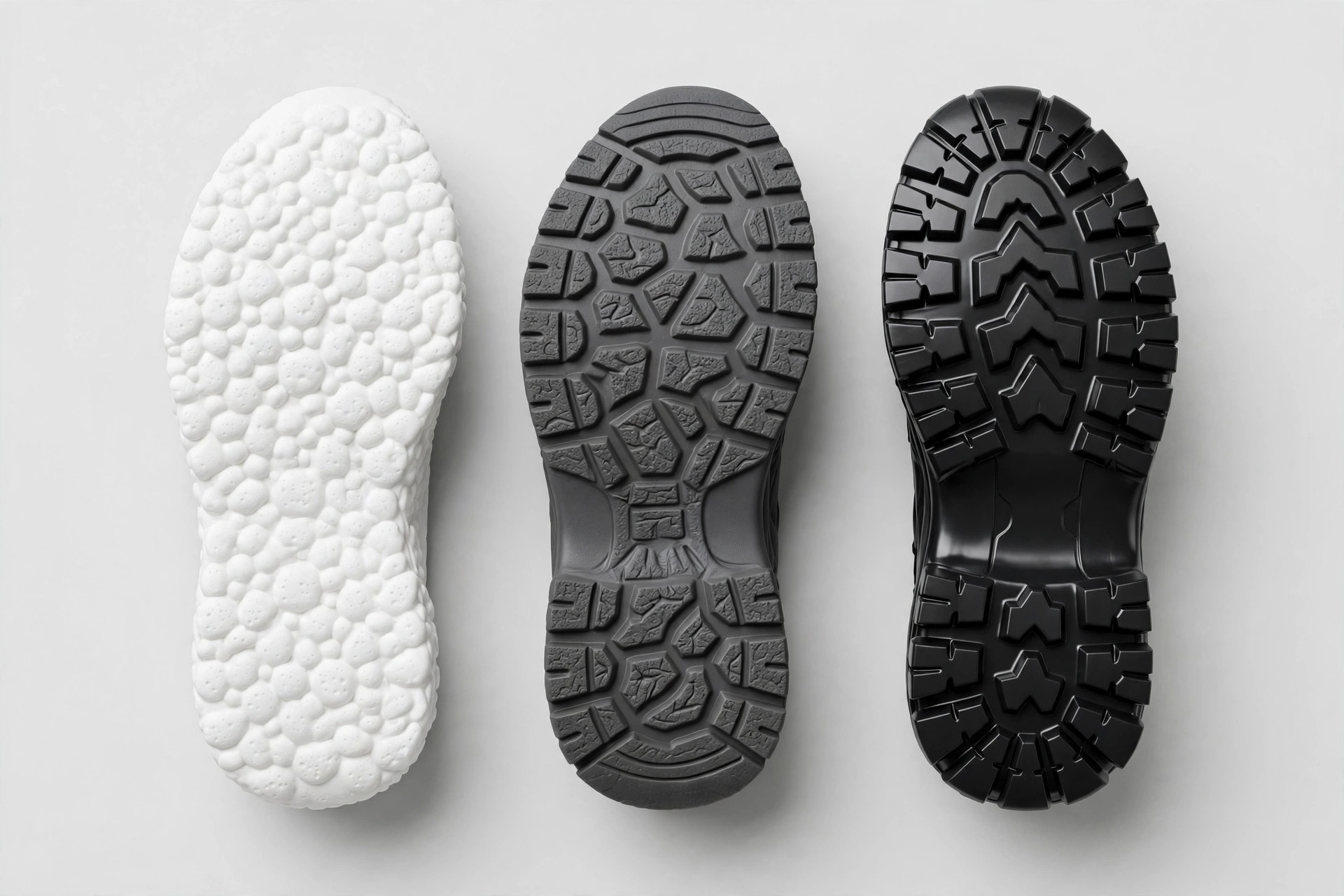
Flip over any shoe and the sole tells you what that shoe was built to do. In 2026, three materials dominate the market: EVA, TPR and rubber. All three look similar at a glance, but they feel different, weigh different amounts and perform very differently under your feet.
If you are choosing between running shoes, everyday trainers or work boots, the sole material matters as much as the brand. This guide compares TPR sole vs EVA sole vs rubber sole in plain terms, weighs up the pros and cons of each side by side, and tells you which one suits your feet, your routine and your budget.
What Is an EVA Sole?
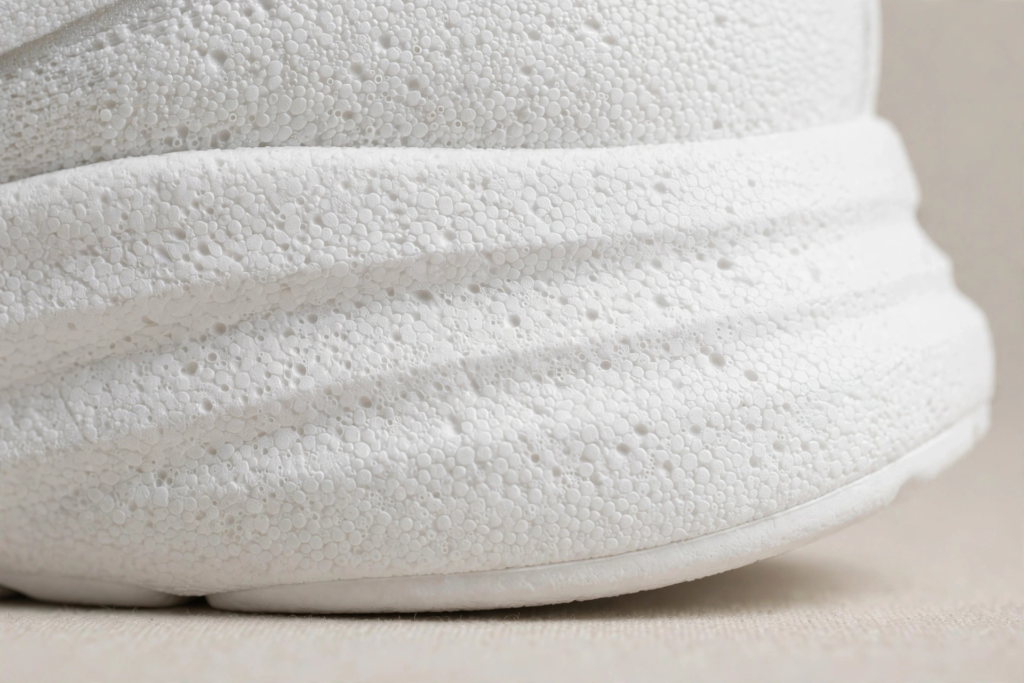
An EVA sole is made from ethylene-vinyl acetate, a lightweight copolymer foam. It is the spongy, cushioning layer you feel in most modern running shoes and in a growing number of walking and recovery shoes.
What makes EVA special is its closed-cell foam structure: millions of tiny sealed air pockets that compress when your foot lands and spring back as you push off. That is why EVA offers the best shock absorption of the three materials. Brands such as Skechers build entire comfort lines around EVA midsoles, and most serious running shoes pair an EVA foam midsole with a thin rubber outsole for grip.
Choose EVA when comfort and lightness matter most: running, gym sessions, long walks and all-day standing. Cushioned comfort shoes such as the Skechers picks in our guide to the best Skechers for plantar fasciitis rely on this same foam comfort to keep feet happy over long distances.
Pros of EVA soles:
- Lightest of the three materials
- Excellent shock absorption and cushioning
- Soft, flexible and comfortable from the first wear
- Good slip resistance on everyday surfaces
- More affordable than natural rubber
Cons of EVA soles:
- Wears down faster than rubber on rough ground
- Can compress and lose bounce over time
- Shows dirt easily in light colours
- Not the most durable option for heavy outdoor use
Browse shoes with EVA soles on Amazon
What Is a TPR Sole?
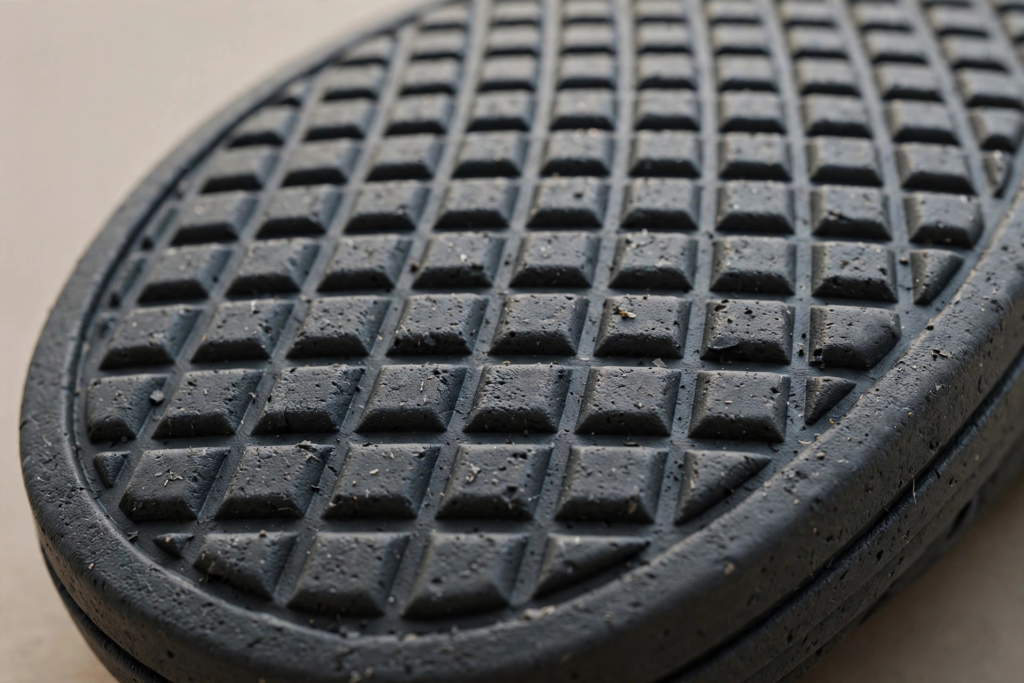
TPR stands for thermoplastic rubber: a blend of rubber and plastic that flows when hot and hardens as it cools. That mouldability is its superpower — manufacturers can shape it cheaply into almost any tread pattern, which is why TPR soles dominate budget footwear.
You will find TPR on casual shoes, children’s shoes, fashion trainers and slippers. It has a matte, slightly rough finish rather than the glossy look of rubber, and it holds up respectably in cold weather. For simple everyday shoes at a friendly price, it does the job.
Pros of TPR soles:
- Very affordable to manufacture, so the shoes cost less
- Decent grip on dry and mildly wet surfaces
- Handles cold temperatures well
- Easy to mould into stylish tread patterns
- Recyclable
Cons of TPR soles:
- Heavier and stiffer than EVA
- Poor shock absorption — a bad pick for running
- Less wear-resistant than rubber
- The matte finish can look cheaper
Browse shoes with TPR soles on Amazon
What Is a Rubber Sole?
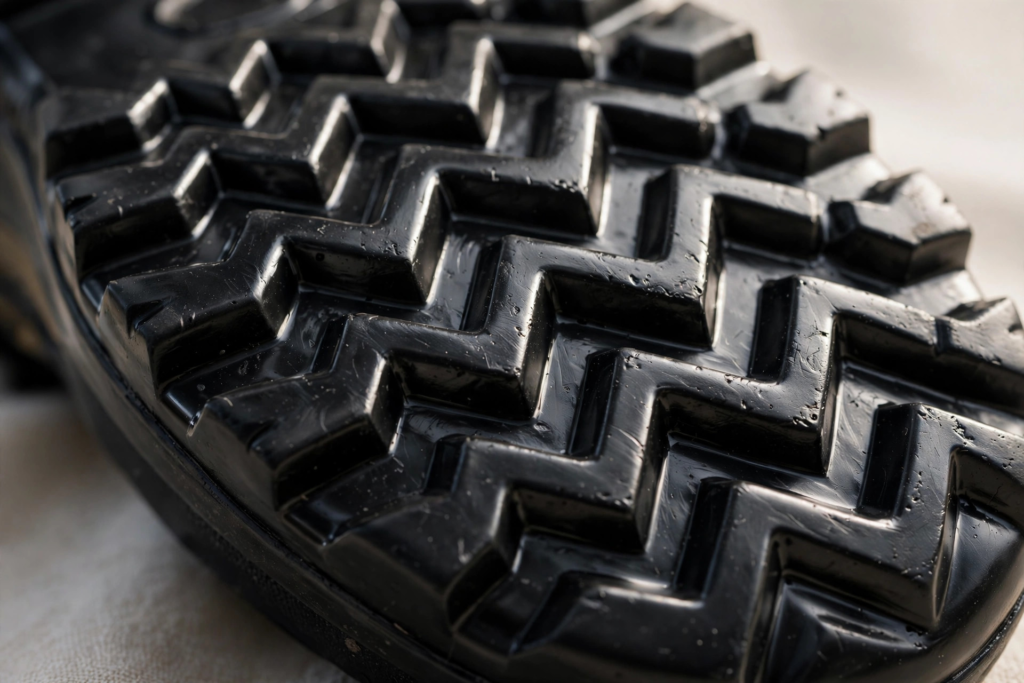
A rubber sole is made from natural rubber or synthetic rubber compounds. It is the oldest of the three materials and still the benchmark for grip and toughness.
Rubber is soft to the touch, flexible and naturally slip-resistant, with a glossy finish that sets it apart from TPR. It resists wear far better than EVA or TPR, which is why hiking boots, work shoes and quality trainers use rubber outsoles. The trade-off is weight: rubber is the heaviest of the three, and rubber-soled shoes usually cost more.
Pros of rubber soles:
- Best traction and slip resistance of the three
- Most durable — outlasts EVA and TPR on abrasive ground
- Flexible, elastic and comfortable once broken in
- Naturally water-resistant
- Non-marking options available for indoor courts
Cons of rubber soles:
- Heaviest sole material of the three
- More expensive than TPR and EVA
- Can squeak on some smooth floors
- Can be pierced by sharp objects
- Standard rubber is not ideal around oils and solvents
Browse shoes with rubber soles on Amazon
TPR vs EVA vs Rubber Sole: Side-by-Side Comparison
| Feature | EVA | TPR | Rubber |
|---|---|---|---|
| Weight | Lightest | Medium | Heaviest |
| Cushioning | Excellent | Poor | Moderate |
| Grip | Good | Fair | Excellent |
| Durability | Moderate | Low | Excellent |
| Price | Low to mid | Lowest | Highest |
| Finish | Smooth foam | Matte | Glossy |
| Best for | Running, walking, gym | Casual, kids, budget | Hiking, work, wet grip |
Which Sole Is Best for Running?
EVA, without question. Running loads each foot with several times your body weight, and EVA’s foam structure absorbs that impact better than any other sole material here. TPR is too heavy and too stiff for distance running, while pure rubber outsoles — though grippy — add weight without adding cushioning.
That is why nearly every serious running shoe uses an EVA or EVA-blend midsole, often capped with a thin rubber outsole for traction. Recovery footwear takes the same approach: cushioned foam shoes such as the Oofos picks in our plantar fasciitis review lean on EVA-style foam to protect tired feet after long days.
Which Sole Is Best for Work and Wet Conditions?
Rubber. When your footing has to be sure — wet pavements, workshop floors, hiking trails — rubber’s traction and abrasion resistance win. Rubber outsoles also stand up to daily abuse far longer than foam or TPR, which matters when you are on your feet all day.
One caveat: standard rubber is not the best choice around oils, petrol or strong chemicals. Specialist oil-resistant compounds exist for those environments, so check the specification if you work around them.
Which Sole Is Best on a Tight Budget?
TPR. If you need everyday casual shoes at the lowest price, TPR delivers acceptable comfort and grip for the money. It will not cushion like EVA or last like rubber, but for school shoes, slippers and fashion trainers it is the sensible budget pick.
If you like soft, cushiony foam soles but want affordable options, foam-based footwear from budget-friendly brands is worth a look — our roundup of the best Crocs alternatives covers wallet-friendly foam shoes.
How to Tell Them Apart at Home
- Touch test: rubber feels soft and slightly tacky with a glossy finish; TPR feels rougher and matte; EVA feels spongy and light.
- Weight test: pick the shoe up — EVA is featherlight, rubber is noticeably heavy, TPR sits in between.
- Press test: press your thumbnail into the sole. EVA dents easily and springs back slowly; rubber and TPR barely dent.
- Look at the finish: a matte finish usually means TPR, a glossy finish means rubber, and a visible foam texture means EVA.
FAQs
Is TPR sole slip-resistant?
Yes, reasonably. TPR grips well on dry and mildly wet surfaces, but rubber provides noticeably better traction on slippery ground.
Is EVA sole good for running?
Yes — EVA is the best of the three for running thanks to its superior shock absorption and light weight.
Does EVA wear out faster than rubber?
Yes. EVA foam compresses and abrades faster than rubber, so EVA-soled shoes typically need replacing sooner under heavy use.
Is TPR waterproof?
Yes. Like EVA and rubber, TPR is impermeable to water, so the sole itself will not soak through.
Which sole lasts the longest?
Rubber. A quality rubber outsole outlasts both TPR and EVA on abrasive surfaces, which is partly why rubber-soled shoes cost more.
Final Verdict
There is no single winner — only the right sole for the job. Choose EVA for running, the gym and all-day comfort; choose rubber for grip, durability and outdoor work; choose TPR when the budget is tight and the use is casual. Match the material to the mission, and your feet will thank you.
Pingback: Best Hey Dude Shoes for Wide Feet: Top 5 Picks
Pingback: Birkibuc vs Birko-Flor (2026): Which Upper Is Better?